Dear Pennies & Pens,
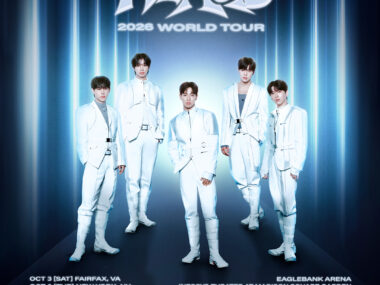
It started like any other day. I was checking Weverse for the latest K-Pop tea when I saw the notification: EXO TOUR ANNOUNCEMENT.
I was immediately irritated — not as a fan, but as someone who understood exactly what was happening.
From an industry perspective, a generic “tour announcement” does two things at once: it energizes the entire global fanbase while protecting the agency from having to deliver a true world tour. Beyond the tour poster, SM’s Q2 investor report tells the story without marketing language. Touring remains concentrated in Korea, Japan, and Southeast Asia, and EXO’s upcoming tour follows that same regional model, alongside similar patterns across the roster.
With that in mind, this article explores why this issue persists after years of fan speculation, recycled explanations, and outright misinformation.
A “World Tour” With Regional Reach
Like EXO’s tour, many K-Pop tours are announced region by region. Asia. LATAM. The U.S. Europe. Each territory revealed separately, often months apart.
Sometimes they are labeled “World Tours” — yet entire continents are missing. LATAM disappears. Africa is ignored. Large portions of Europe are skipped.
Even more strategic is the phrase “And more” printed at the bottom of tour posters. It keeps fans engaged. It keeps hope alive. It sustains online conversation.
At the same time, it protects the agency if expansion never materializes.
Over and over again, international K-Pop fans are left to piece together the puzzle of tour routing themselves. Comment sections become strategy rooms. Reddit threads become pseudo-planning departments. Discord servers debate venues and ticket scaling as if they’re on payroll.
And let me be clear: this is not a dig at fans.
It is an observation that agencies are relying on global enthusiasm without fully committing to global infrastructure.
What “World Tour” Actually Means
Meanwhile, there’s an artist whose image we circulate every time she come around. She just became a billionaire — to be extra petty she reached this milestone after completing her Cowboy Carter World Tour.
Throughout her illustrious career, Beyoncé has created spectacular performances across ten solo tours, many of them spanning multiple continents with 100+ show runs. Her global audience isn’t imaginary — it was built through consistent, international touring. Visiting regions such as Europe, North America, Asia, and beyond, Beyoncé has used live performance as a vehicle to expand her footprint, not just serve it.
In essence, Beyoncé set the standard, literally and figuratively. She cultivated the Beyhive with slow-burning honey via expansive world tours. That kind of global momentum doesn’t materialize overnight. It is built — city by city, continent by continent.
It’s also worth noting that Beyoncé began touring in 2003 — the same year she released her first solo album. She has now spent more than two decades growing her fanbase through sustained live engagement.
She didn’t become Queen Bey overnight. She became King Bey by consistently delivering culture-shifting live experiences. Beychella, for example, became one of the most searched live performances in Google’s 27-year history — not because it was random, but because it was the culmination of years of global visibility and touring discipline.
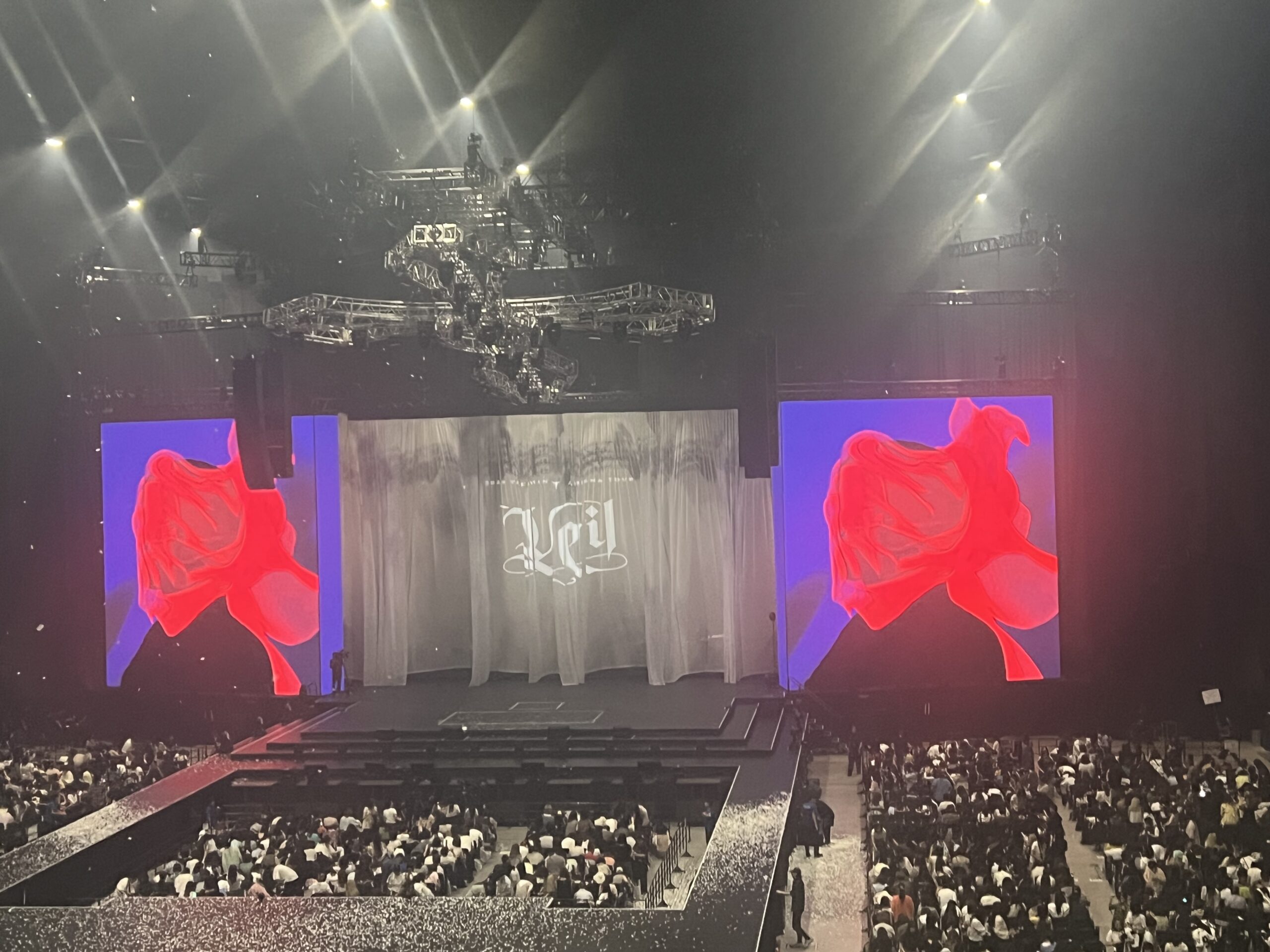
Photo by LoudPen.
Fans Aren’t Asking for Stadiums. They’re Asking for Access.
To be clear, fans are not demanding massive, multi-stadium global spectacles. They are asking for access. The opportunity to see their favorite artists live. The chance to attend a VIP event. A moment to actually use their light stick. The excitement of purchasing concert merch before or after the show.
International fans — especially those outside of Asia — are requesting this access because every day they are met with the illusion of proximity. Artists and agencies consistently post across global platforms such as YouTube, Instagram, Twitter, and TikTok, reinforcing a close artist–fan relationship. The messaging is intimate. The connection feels immediate.
And yet, when tour announcements go live, international fans are often expected to cross borders for a concert — or settle for a livestream ticket. That disconnect is hard to ignore.
The internet provides instant access to content. Why doesn’t that same global access extend to in-person experiences? When the foundation of an artist’s marketing is emotional connection, a lack of physical access inevitably weakens that bond.
International fans also shoulder significant financial commitment. They spend thousands annually on albums, merchandise, fan events, and platform subscriptions. In many cases, it costs them more to participate than domestic fans — due to international shipping fees, customs, taxes, and duties. And yet they absorb those costs because they are invested.
Offering more opportunities for international fans to attend live shows allows them to translate digital engagement into tangible memory. Instead of watching from behind a screen, they are present. In real time. In the room.
In-person experiences don’t just generate revenue. They validate the fan’s investment — and often deepen their long-term support.
You Don’t Go Global by Staying Local
It’s tough to sell out the Cowboys Stadium in Arlington, Texas when you’ve only performed in Korea. My guess is that it’d be difficult to reach Number One on the Billboard chart when your music has never been played on the radio in the US & Europe. I’m not sure about this but if you’ve never been a guest on a BBC show or the Today show, I don’t think you are any closer to winning a GRAMMY.
Lack of exposure to the Western market will lead to stagnation in an artist’s career. TAEMIN, The Ace of K-Pop, sells out arenas in Korea & Japan but is limited to theater sized venues in the US & Europe because after 11 years of being a soloist, he’s only completed one world tour. Fans have waited over a decade to see him perform live. A K-Pop concert should never be so serious that it takes the design of a decade to attend a show.
Performing live for fans all over the world deepens the artist-fan connection in addition to giving fans a shared experience. Regardless of nationality, gender, romantic preferences, or socio-economic status, fans can bond over seeing their favorite live. They can compare notes, discuss the most impactful moments, and gush over the performance.
It’s like this — I’m not internationally known but I’m known to rock the microphone. You Don’t Go Global by Staying Local.
Things Are Changing — A Little
The landscape is improving — slightly. With each passing year, more K-Pop artists are expanding their routing to include the United States, Europe, Latin America, and all of Asia.
Mid-tier groups are testing new cities. Soloists are adding second legs. Smaller venues are selling out. There is evidence that demand exists beyond Korea and Japan. Which means artists can successfully mobilize international audiences when given the opportunity.
In U.S. cities like Dallas, New York, Chicago, and L.A., fans have shown up consistently. MONSTA X. MAMAMOO. CRAVITY. TAEMIN. Yugyeom. Moon Byul. Whee In. Hwasa. These tours were not hypothetical. Tickets were purchased. Merchandise sold. Crowds were loud. The infrastructure exists.
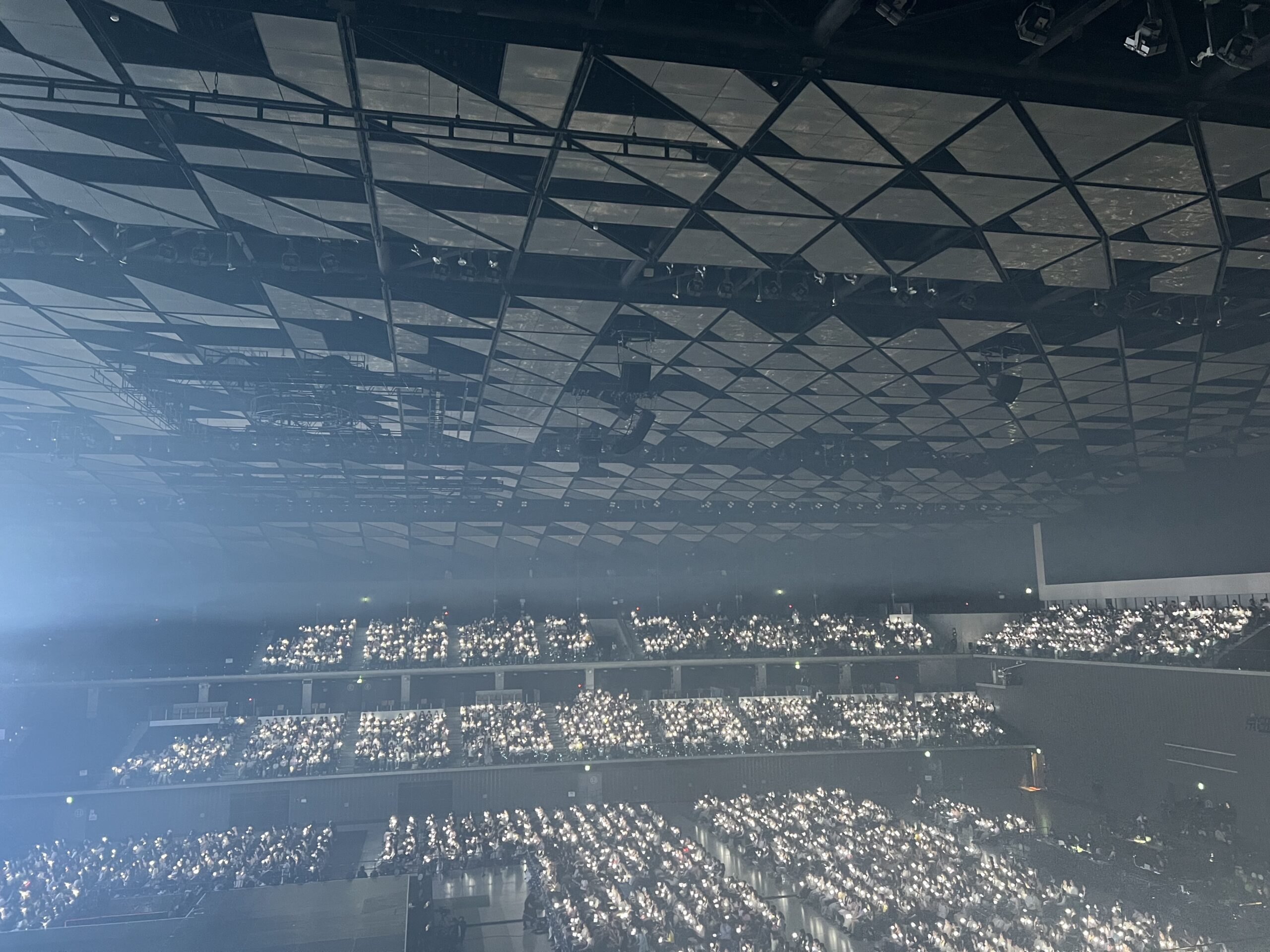
Photo by LoudPen.
But expansion has been inconsistent. Legacy acts such as Super Junior, SHINee, and EXO have yet to go on proper world tours. Multi-continent touring is still treated as optional rather than foundational. That imbalance is difficult to justify when Super Junior is 20 years into their career, SHINee 17, and EXO 14.
Global routing remains the exception, not the standard. Progress is visible. It just isn’t proportional to the size of the global fandom.
Why The Excuses Are Bullshit
Explanations for limited global routing rarely come from the industry itself. Agencies do not publish detailed breakdowns explaining why entire regions are excluded. They do not outline cost analyses. They do not host press conferences discussing logistical barriers. They simply announce dates.
The justifications come from fans.
And that’s why the excuses are bullshit.
A global industry projected to generate $20 billion by 2031 should not have Reddit threads and Facebook comment sections functioning as unpaid strategy departments.
Instead, the same rationalizations circulate every tour cycle:
“Europe doesn’t sell.”
“Africa doesn’t have enough fans.”
“It’s harder to get visas.”
“Less profit.”
“The U.S. is massive.”
“Promoters decide.”
“They went last year.”
“Be grateful.”
“It’s just business.”
Repeated often enough, these phrases begin to sound like official policy — despite no executive ever formally confirming them.
In the rare instance that an explanation is offered by an agency or promoter, it is vague: “Visa issues.” “Scheduling conflicts.” “Timing.” Broad language that ends the conversation without clarifying anything.
And yet the pattern persists.
If touring were truly impossible, smaller and mid-tier artists would not be doing it. If demand were truly absent, theaters would not sell out. If infrastructure did not exist, Dallas, Chicago, London, Toronto, São Paulo, Sydney, and Mexico City would not repeatedly appear on select routing maps.
The reality is simpler:
Global touring requires intention.
It requires allocation.
It requires willingness.
When fans are doing unpaid forensic accounting to understand tour decisions, that signals a communication failure.
The absence of transparency has allowed speculation to masquerade as strategy — and repetition has allowed it to solidify into “truth.”
Global Is More Than a Marketing Term
The industry loves the word “global”.
Global superstars.
Global ambassadors.
Global rookies.
Global fandom.
But a word is not a strategy.
You cannot cultivate international audiences online and then limit in-person access to a handful of cities. You cannot repeatedly monetize fans across continents while treating live presence outside Asia as an exception.
A livestream is not the same as a stage.
Merch shipping is not the same as a concert memory.
Hashtags are not the same as shared experience.
If K-Pop intends to secure a permanent place in the international music market — not simply rack up overseas streaming numbers — then touring beyond its home base cannot remain optional.
Because fans are not asking for fantasy.
They are asking to be met where they are.
And that requires more than a tour announcement.
It requires commitment.
This article features original photography by LoudPen
And there it is. de la Pen…All Pen Everything.